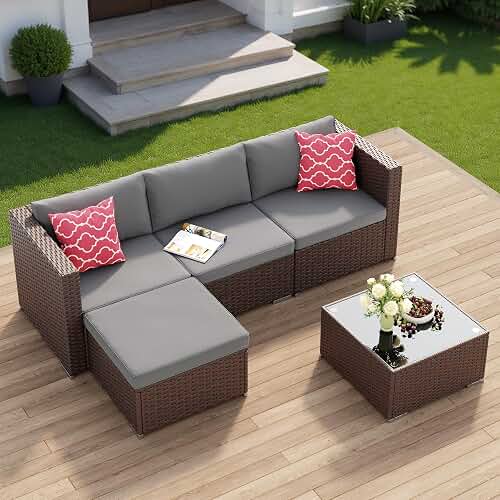
The three materials, side by side
Most "material" arguments are actually frame arguments. Wicker isn't a structural material — it's PE rattan woven over steel or aluminum. Teak on a mixed-material set is often just the armrests or slats, with aluminum doing the load-bearing work. Read the frame line on any listing before you read the material name in the title.
Quick answer: For most patios, powder-coated aluminum is the lowest-maintenance frame material that survives rain, snow and sun without rusting — it's the safe default. Teak (and teak-look acacia) buys you warmth and a wood feel but asks for oiling or acceptance of a silver-grey patina, while all-weather PE wicker is really a resin skin over a metal frame, so the frame underneath matters more than the weave. The honest shortcut: pick aluminum if you want to ignore your furniture, wood if you want to touch it, wicker if you want the look of a sectional at a lower price.
Aluminum
Aluminum doesn't rust. That's not marketing — it's chemistry, and it's the single biggest reason it dominates the mid-range patio market. Powder coating adds a colour layer and some scratch protection. The ZANDOR set leans on this hard, pairing a powder-coated aluminum frame with stainless-steel hardware and claiming rust-proof, water-resistant performance across rain, snow and sun.
Finding the right outdoor furniture materials guide comes down to matching the features to how you will actually use it.
The trade-off is weight. Aluminum is light, which is great when you're rearranging a balcony and bad when a storm rolls through. If you live somewhere windy, plan on either heavy cushions staying on, or bringing chairs in.
Teak and teak-look wood
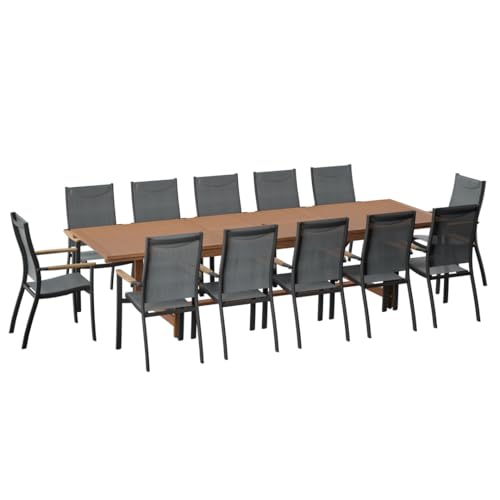
Real teak has high natural oil content, which is why it's the traditional choice for boat decks. It's also expensive, which is why most "teak" patio sets are hybrids. The Amazonia Franklin is honest about this: aluminum chair frames with 100% Indonesian teak armrests. You get wood where your skin touches it and metal where the stress goes.
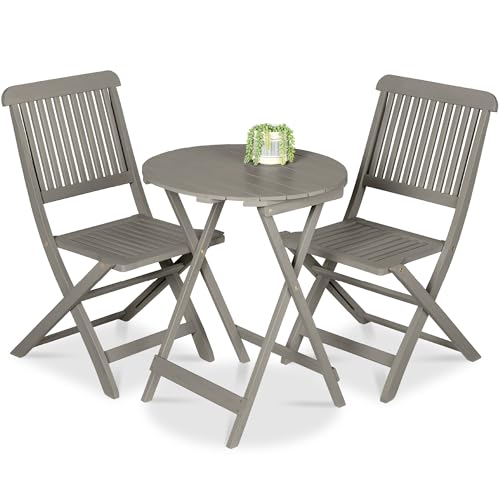
Acacia is the budget cousin. The Best Choice Products bistro set uses acacia that resists rot and wear from sun or rain, with a teak finish that seals the wood and helps it shrug off stains. It's a real-wood feel at $117.99, and the open-slat design keeps moisture from pooling.
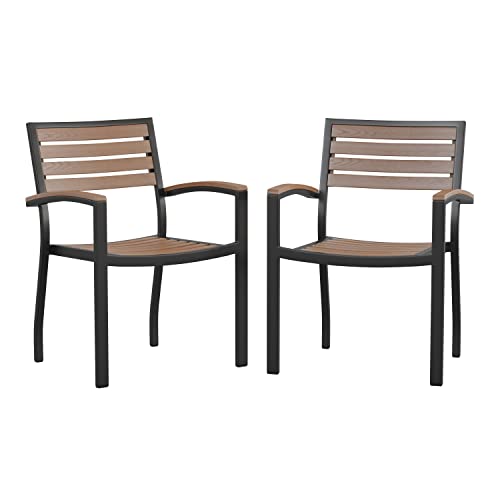
Then there's synthetic teak — the Flash Furniture chair uses faux teak slats on an aluminum frame, which sidesteps wood maintenance entirely while keeping the warm-neutral look.
All-weather wicker
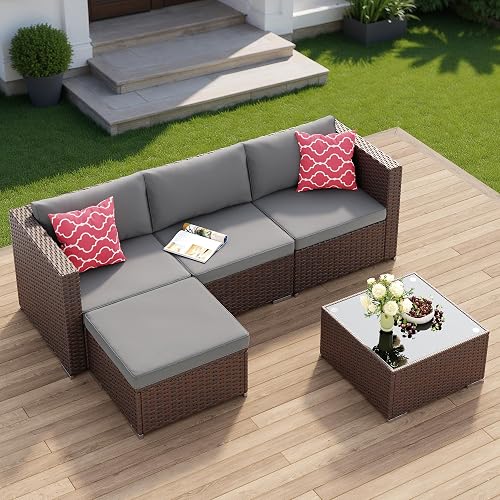
PE rattan is a plastic weave, so the strands themselves don't rot. The Aiho sectional is handwoven PE rattan over a powder-coated steel frame — note steel, not aluminum. Steel is stronger and heavier, but it's the one frame material on this list that can rust if the coating gets chipped and stays wet. Worth knowing, not worth panicking over.
Wicker's real advantage is price-per-seat. The Aiho set is five pieces with cushions and a glass table for $178.96, with at least four different layout combinations and seating clips to hold the modules together.
Who each material is for
Choose aluminum if your furniture lives outside year-round and you don't want a maintenance calendar. Choose it if you rearrange often, if you have a pool (chlorine and salt air are hard on steel), or if you want higher weight capacity — the ZANDOR chairs are rated to 400 lbs each, and the Flash Furniture chair to 300 lb static.
Choose wood or teak-accented if the tactile quality matters. Wood doesn't get scorching in direct sun the way bare metal can, and it looks better as it ages if you like a silvered patina. The Amazonia Franklin's extendable table (86" out to 130") and leveling legs make it the pick for people who host actual dinners.
Choose wicker if you want sectional-style lounging on a modest budget and you're willing to accept that the weave is the aesthetic, not the structure.
Who should skip each material
Skip aluminum if you're in a high-wind location without storage, or if you dislike the slightly hollow feel of light frames. It also dents rather than bends back.
Skip real wood if you won't maintain it. Untreated teak greys; sealed acacia needs re-sealing eventually. If "I'll oil it every spring" sounds like a lie you're telling yourself, buy synthetic slats instead.
Skip wicker if you're in punishing UV or you need something that reads as formal. Resin weave can become brittle over years of intense sun, and a steel frame under a chipped coating is a rust risk near saltwater.
The honest trade-offs
Nobody wins outright. Aluminum wins on maintenance and loses on heft. Teak wins on longevity and feel, loses on price — the Amazonia Franklin is $1,690.00, roughly fourteen times the acacia bistro set, though it's also 13 pieces against 3. Wicker wins on cost-per-seat and loses on long-term UV resilience.
Cushions are the sleeper issue. They fail before frames do, on every material. The specs that matter: the ZANDOR uses 5.5" high-density foam with machine-washable covers; the MAISON BACKYARDS set uses 5.2" cushions with 28D high-resilience foam and UV-resistant covers on YKK zippers; the Aiho's cushion and pillow covers are removable and washable. Removable covers aren't a luxury feature — they're what determines whether you're still using the set in year four.
What to check on the listing before you buy
Listings change more often than articles do. Before you click buy:
- Current price and variant. Colour and piece-count variants often sit on the same listing at very different prices. Confirm the one in your cart is the one you read about.
- What "teak" refers to. On hybrid sets it may be armrests only, a finish, or synthetic slats. The Amazonia Franklin specifies teak armrests; the Flash Furniture chair specifies faux teak slats; the Best Choice set is acacia with a teak finish.
- Frame metal. Aluminum and steel are both "powder-coated" — the listing bullet tells you which.
- Warranty and returns window, plus any included extras. The Amazonia Franklin lists a free maintenance kit; ZANDOR lists 24/7 support for missing or damaged parts.
- Assembly reality. Flash Furniture and Best Choice ship ready to use; Amazonia's chairs arrive assembled but the table doesn't; ZANDOR is tool-free in one box.
- Recent reviews and Q&A. Go read them yourself, filtered to the most recent — that's where changed suppliers show up first.
ZANDOR Aluminum Outdoor Patio Furniture Set – 2 Pcs Armchair with Washable Thick Cushions,All-Weather Modern Metal Furniture for Garden,Backyard,Porch,Grey — consider instead if…
…you want the purest expression of the aluminum case: rust-proof frame, stainless hardware, non-scratch foot pads, and imitation-wood armrests for the warmth without the upkeep. At 400 lbs per chair it's the highest stated capacity here. See the ZANDOR Aluminum Outdoor Patio Furniture Set – 2 Pcs Armchair with Washable Thick Cushions,All-Weather Modern Metal Furniture for Garden,Backyard,Porch,Grey listing for current configuration.
Flash Furniture Stackable Aluminum Patio Chair - All-Weather Black Framed Side Chair with Faux Teak Slats - Commercial Grade - Set of 2 — consider instead if…
…storage is your constraint. These stack up to 8 high, arrive fully assembled, and use welded aluminum with plastic floor glides so they work indoors too. Dimensions are 22.5"W x 20.75"D x 33.75"H. Note the listing's own advice to protect the frames from prolonged wet weather. Details on the Flash Furniture Stackable Aluminum Patio Chair - All-Weather Black Framed Side Chair with Faux Teak Slats - Commercial Grade - Set of 2 page.
Best Choice Products 3-Piece Acacia Wood Bistro Set, Folding Patio Furniture for Backyard, Balcony, Deck w/ 2 Chairs, Round Coffee Table, Teak Finish - Gray — consider instead if…
…you want real wood on a small balcony for $117.99. It folds flat for storage, needs no assembly, and the 24"-diameter table with 35"-high chairs suits a two-person space. Check the Best Choice Products 3-Piece Acacia Wood Bistro Set, Folding Patio Furniture for Backyard, Balcony, Deck w/ 2 Chairs, Round Coffee Table, Teak Finish - Gray listing for the current finish options.
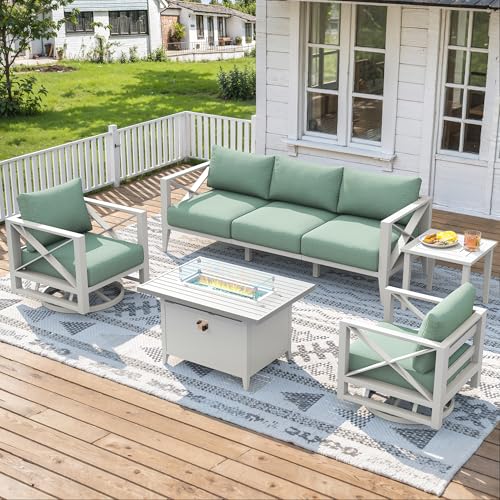
Aluminum Patio Furniture Set with Oversized Fire Pit Table, 7-Piece All-Weather Outdoor Conversation Set with Swivel Rocking Chairs, Oversized Modern Sofa for Backyard, Deck, Balcony-Brown — consider instead if…
…you want the fire-pit-centred layout. Seven pieces, swivel rocking chairs, modular standalone seats, and 5.2" cushions on UV-resistant covers with YKK zippers. See the Aluminum Patio Furniture Set with Oversized Fire Pit Table, 7-Piece All-Weather Outdoor Conversation Set with Swivel Rocking Chairs, Oversized Modern Sofa for Backyard,Deck,Balcony–White listing.
Aiho 5 Pieces Patio Furniture Set All-Weather Outdoor Wicker Sectional Patio Furniture with Cushion and Glass Table (Grey) — consider instead if…
…budget is the binding constraint and you want a reconfigurable sectional. Four-plus layout combinations, seating clips to stop drift, washable cushion covers, all on a powder-coated steel frame. Look at the Aiho 5 Pieces Patio Furniture Set All-Weather Outdoor Wicker Sectional Patio Furniture with Cushion and Glass Table (Grey) listing.
Amazonia Franklin 13-Piece Teak Finish Wood and Aluminum Rectangular Extendable Patio Dining Set | 100% Teak from Indonesia Armrests | Ideal for Outdoors and Indoors — consider instead if…
…you seat ten to twelve people and want the table to extend from 86" to 130". Twelve aluminum armchairs with Indonesian teak armrests arrive fully assembled; the table has leveling legs and needs some assembly. Full spec on the Amazonia Franklin 13-Piece Teak Finish Wood and Aluminum Rectangular Extendable Patio Dining Set | 100% Teak from Indonesia Armrests | Ideal for Outdoors and Indoors listing.
FAQ
Is teak actually worth the premium over aluminum? It depends what you're buying it for. Structurally, aluminum is fine — it doesn't rust and it's lighter. Teak buys you appearance, feel, and a material that ages rather than degrades. Hybrid sets like the Amazonia Franklin split the difference by putting teak only where your arms rest.
Does wicker patio furniture rust? The PE rattan weave doesn't, but the frame underneath can. The Aiho sectional uses powder-coated steel — protected while the coating is intact, vulnerable if it chips and stays wet. Aluminum-framed wicker avoids the question entirely.
Which material handles full sun best? Aluminum frames handle UV well but can get hot to the touch. Wood stays cooler and greys gracefully. Resin wicker is the most UV-sensitive over many years. If sun exposure is extreme, prioritise UV-rated cushion covers — the MAISON BACKYARDS set specifies UV-resistant covers.
What's the difference between acacia and teak? Both are dense hardwoods that resist rot, but teak has higher natural oil content and costs considerably more. Acacia with a sealing teak finish, like the Best Choice Products bistro set, gets you most of the look and weather resistance at a fraction of the price — it just needs re-sealing sooner.
Related guides
- Alternative Options for Best patio and outdoor living furniture - patio sets, outdoor umbrellas, fire pits, adirondack chairs, pergolas, hammocks, gazebos, outdoor sofas, outdoor dining sets
- Why Rates Vary for Best patio and outdoor living furniture - patio sets, outdoor umbrellas, fire pits, adirondack chairs, pergolas, hammocks, gazebos, outdoor sofas, outdoor dining sets
- Terms and Conditions
Key Takeaways
- Choosing the right outdoor furniture materials guide means matching the key features to your specific needs and budget
- Read real customer reviews and check the return policy before you commit
- Compare value across models — the priciest option is not always the best fit